Unraveling the Complexities: A Deep Dive into Federal Workers’ Compensation Permanent Partial Disability Settlements
Have you ever been caught in the whirlwind of uncertainty that ensues after suffering an injury or illness at work? If yes, then you’ve landed in the right place. This blog post seeks to clarify the complexities of federal workers’ compensation permanent partial disability settlements and provide clear, valuable insights to those who need it most.
As a federal employee, your job comes with multiple benefits and rights, one of which is the provision for workers’ compensation in case of an unfortunate event that leads to some form of disability. This compensation serves as a safety net, providing financial support and medical coverage if you sustain injuries or develop illnesses due to your work. However, the nuances of the federal workers’ compensation system can be intricate and intimidating, especially when dealing with permanent partial disability settlements.
In this labyrinth of legal jargon and procedural intricacies, understanding your rights, the scope of benefits, and how to navigate through the process becomes paramount. That’s why this blog post aims to demystify the concept of federal workers’ compensation permanent partial disability settlements.
We’ll start by defining what federal workers’ compensation is and its different types. We will then delve deeper into the concept of permanent partial disability, its categorization, how it’s evaluated, and how settlements are determined. We’ll also walk you through the process of claiming your settlement, detailing each step so you don’t have to feel lost or overwhelmed.
We’ll be addressing some critical questions too: What if your claim gets denied? Can you appeal? Can you return to work after receiving a permanent partial disability settlement? What happens to your benefits then? This comprehensive guide will tackle these questions head-on, providing you with practical, actionable information.
Why is this important for you? If you’re a federal employee who has recently suffered a work-related injury or illness, understanding the settlement process will empower you to make informed decisions. It can impact the financial stability of not just you, but also that of your dependents. Even if you haven’t experienced such an incident, having this knowledge can equip you to deal with any potential future situation swiftly and efficiently.
Moreover, even for those who aren’t federal employees, understanding these processes can provide valuable insights into disability rights and compensation norms. For human resource professionals and labor rights activists, this knowledge can be instrumental in advocating for workers’ rights and ensuring fair treatment.
In essence, this blog post will serve as your comprehensive guide to federal workers’ compensation permanent partial disability settlements. By the end, we hope you’ll have a better understanding of your rights, the process, and how to navigate these waters with confidence and clarity. The journey towards understanding your rights and legal provisions might seem daunting now, but remember, knowledge is power. So let’s get started on this journey of empowerment.
Fundamentals and Framework for Federal Workers’ Compensation Permanent Partial Disability Settlement
Understanding the intricacies of federal workers’ compensation and specifically, permanent partial disability settlement, can be complex. The system is designed to protect workers who suffer on-the-job injuries or illnesses that result in partial disability. This article provides a comprehensive understanding of the fundamentals and framework of the topic.
The federal workers’ compensation system is governed by the Federal Employees’ Compensation Act (FECA), administered by the Office of Workers’ Compensation Programs (OWCP). This act provides compensation benefits to civilian employees of the United States for disability due to personal injury sustained while in the performance of duty or due to an employment-related disease. The benefits include medical care, compensation for wage loss, and help in returning to work.
Permanent partial disability (PPD) is a specific category within the workers’ compensation system that relates to workers who, due to a work-related injury or illness, have permanently lost the use of a body part or function to a certain degree, but are still able to work in some capacity. The level of impairment is usually determined by a physician following established guidelines.
Unlike temporary disabilities, where an employee is expected to recover fully, PPD implies a lasting impairment. However, it’s important to note that ‘permanent’ does not mean the worker cannot return to work. Rather, it indicates that the worker has reached a point in their recovery where further medical improvement is not expected.
The calculation of PPD benefits varies, but it generally takes into account the severity of the impairment, the worker’s ability to work in some capacity, and sometimes the worker’s age and skill level. For federal employees, FECA provides for compensation payments for loss of earning capacity, scheduled awards for loss of certain body parts or functions, and vocational rehabilitation services.
A ‘settlement’ in workers’ compensation refers to an agreement between the worker and the employer (or their insurance carrier) that resolves the claim. In a PPD settlement, the worker usually receives a lump sum or series of payments while the employer or insurer is released from future liability for the injury or illness.
The decision to settle is a significant one and should be made with the advice of a knowledgeable workers’ compensation attorney. The settlement must fairly compensate the worker for their loss of earning capacity and any future medical expenses related to the injury or illness.
Under FECA, the federal workers compensation system does not technically have a ‘settlement’ provision for PPD claims in the same way that state systems might. Instead, federal employees are entitled to receive ongoing benefits as long as the partial disability continues to affect their earning capacity. They may also receive a scheduled award – a fixed amount based on the severity and type of injury.
However, in some cases, federal workers might reach an agreement with OWCP to receive a lump sum payment, particularly if they are eligible for retirement or have another source of income. This is not technically a ‘settlement’, but it functions in a similar way by providing the worker with a large payment upfront, rather than ongoing benefits.
In conclusion, permanent partial disability is an important aspect of the federal workers’ compensation system, designed to ensure that workers who suffer a lasting impairment due to a work-related injury or illness are fairly compensated. While the federal system does not provide for ‘settlements’ in the same way as state systems, federal workers with PPD can still receive substantial benefits. Understanding these rights and benefits is crucial for any federal worker who suffers a work-related injury or illness.
Federal Workers’ Compensation: A Comprehensive Guide to Permanent Partial Disability Settlements
Federal workers who sustain injuries or illnesses while performing their job duties have access to a unique compensation system known as the Federal Employees’ Compensation Act (FECA). This system gives federal employees distinct rights and benefits, which includes compensation for permanent partial disability (PPD). This article provides a step-by-step guide and real-world examples to help you understand federal workers’ compensation PPD settlements.
Step 1: Understanding What Permanent Partial Disability Means
The first step is to understand what PPD is. A permanent partial disability occurs when an employee sustains an injury or illness that results in a permanent impairment, but does not completely limit their ability to work. This could be anything from losing a finger or an arm, suffering severe burns, or experiencing respiratory disorders due to exposure to harmful substances at work.
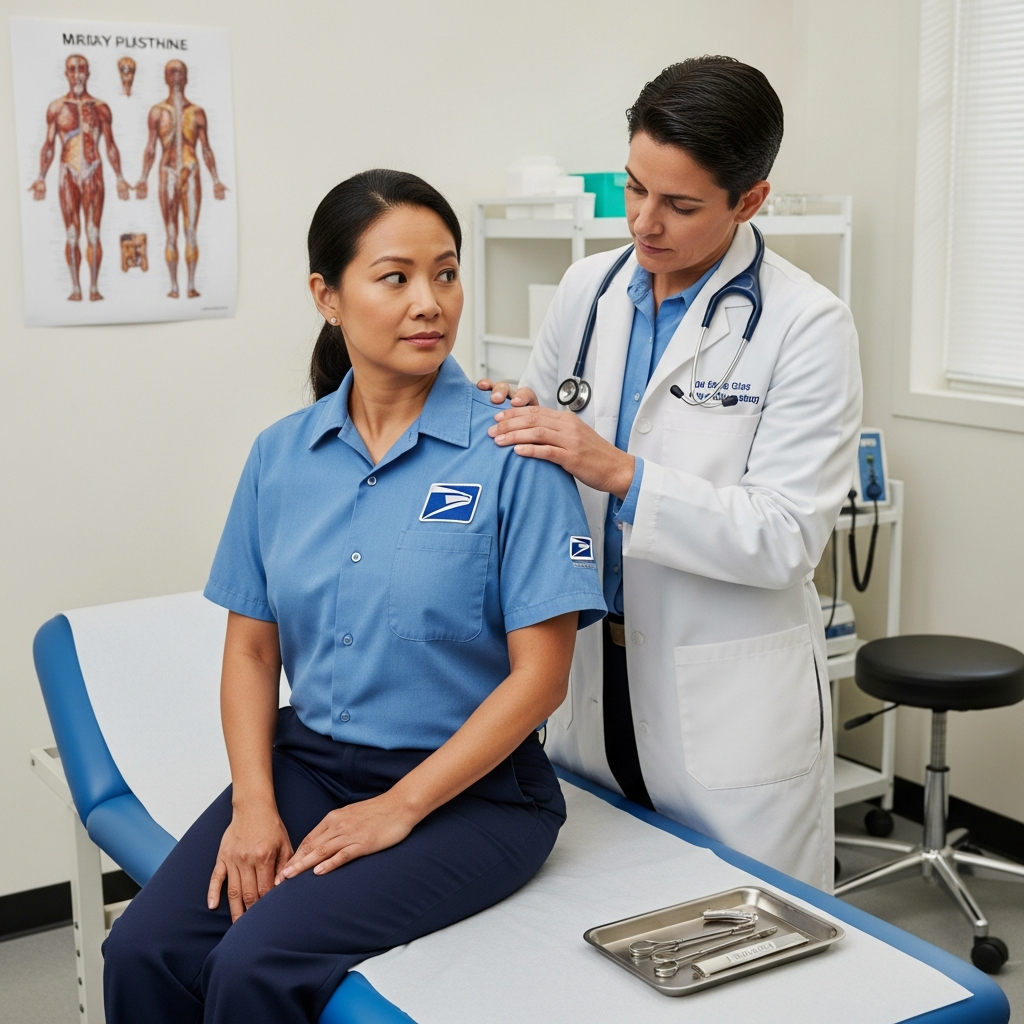
For instance, consider a federal postal worker who permanently injures his leg in a vehicle accident while on duty. Although he can still perform his duties, he may not be as efficient as before the injury, qualifying him for a PPD settlement.
Step 2: Understanding How PPD Settlements Work
PPD settlements are calculated based on the severity of your disability and the impact it has on your wage-earning capacity. The FECA provides a schedule of benefits for certain body parts and functions. If your disability falls under these scheduled losses, you’re entitled to receive compensation for a specific number of weeks. For non-scheduled injuries, compensation is calculated based on loss of wage-earning capacity.
To illustrate, if an employee loses an arm due to a workplace accident, the FECA schedule provides compensation equivalent to 312 weeks of pay. On the other hand, if the employee suffers a back injury (which is non-scheduled), the compensation would be determined by the reduction in their capacity to earn.
Step 3: Filing a Claim for PPD
To file a PPD claim, you would need to fill out form CA-7 (Claim for Compensation). This form should be submitted to the Office of Workers’ Compensation Programs (OWCP) within three years of the date of injury or from the date you realized the injury was related to your job.
For instance, let’s say a federal worker was exposed to asbestos during his work and developed mesothelioma years later. He would have three years from the date he was diagnosed or became aware that the disease was work-related to file his claim.
Step 4: Receiving Your PPD Settlement
Once your claim is approved, you will start receiving your benefits. The OWCP pays PPD benefits at 66 2/3% of your salary if you have no dependents, or 75% if you have one or more dependents. However, the payment cannot exceed 75% of the maximum pay rate of a GS-15 federal employee.
Step 5: Navigating Possible Disputes
Disputes can arise in the process of claiming PPD settlements. For example, the OWCP may disagree with your doctor’s assessment of your disability or wage-earning capacity. In such cases, you have the right to request a hearing or review before the Employees’ Compensation Appeals Board.
In conclusion, understanding the intricacies of federal workers’ compensation permanent partial disability settlements can be complicated but is vital for securing the compensation you deserve. If you’re unsure about any part of the process, consider consulting with a professional who specializes in federal workers’ compensation claims to help you navigate the system and advocate on your behalf.
Unraveling the Complexities of Federal Workers’ Compensation Permanent Partial Disability Settlement
Federal workers often face a maze of challenges when dealing with permanent partial disability settlements under the Federal Workers’ Compensation (FWC) scheme. The complexity of the system, combined with a lack of knowledge, can lead to confusion and potential pitfalls. This article aims to address these issues and misconceptions, providing expert guidance and best practices to navigate this intricate terrain.
Understanding Permanent Partial Disability
The first step in understanding the complexities of FWC permanent partial disability settlements is to grasp what ‘permanent partial disability’ (PPD) means. PPD refers to a condition where an injured federal worker is unable to completely recover, leaving them with a lasting impairment that restricts their ability to work effectively. However, it’s critical to note that PPD doesn’t mean that the worker is entirely incapable of working; rather, they can work but not as efficiently as before their injury.
Common Challenges
Numerous challenges often plague federal workers seeking compensation for PPD. One of the most daunting is the maze-like bureaucratic process. From filing claims to attending hearings and negotiating settlements, the procedure is often overwhelming for many. Another challenge is the misconception that one needs to be completely disabled to qualify for benefits. This misbelief often discourages partially disabled workers from claiming their rightful benefits.
Additionally, there are issues like under-compensation and delays in settlement processing. The lack of transparency in how compensation amounts are calculated often leaves workers feeling short-changed. The process can also be protracted, causing financial strain on claimants as they await their settlements.
Solutions and Expert Tips
While these challenges may seem discouraging, solutions exist. Here are some expert tips to help you navigate the FWC permanent partial disability settlement process
1. Understand Your Rights: Before initiating a claim, familiarize yourself with your rights under the Federal Employees’ Compensation Act (FECA). Knowing what you’re entitled to can help you assert your claims more confidently.
2. Engage a Compensation Attorney: Navigating the complex bureaucracy of FWC claims can be daunting. A seasoned federal workers’ compensation attorney can help guide you through the process, ensuring that all necessary paperwork is correctly filed and deadlines are met.
3. Seek Adequate Medical Documentation: Medical records play a crucial role in establishing your disability level. It’s essential that your doctor provides comprehensive documentation detailing the nature and extent of your injuries, the prognosis, and how it impacts your ability to work.
4. Negotiate Your Settlement: Don’t accept the first offer put forth by the Department of Labor (DOL). With the help of your attorney, negotiate for a fair compensation that takes into account your medical expenses, lost wages, and future earning capacity.
5. Prepare for Independent Medical Examinations: The DOL might require an independent medical examination (IME) to validate your claim. Prepare for this by understanding what to expect during an IME and discussing it with your attorney.
6. Practice Patience: The FWC settlement process can be lengthy, often taking months or even years. It’s important to be patient and stay focused on the end goal – a fair settlement that compensates for your disability.
Dispelling Misconceptions
One prevalent misconception is that federal workers with PPD cannot return to work. In reality, many workers can still engage in gainful employment, albeit at a diminished capacity. Another misconception is that federal workers must accept the first settlement offer from the DOL. However, federal workers have the right to negotiate their settlement, and doing so often yields more favorable results.
In conclusion, navigating the complexities of a federal workers’ compensation permanent partial disability settlement can be challenging but not impossible. By understanding your rights, engaging expert help, advocating for fair compensation, and dispelling common misconceptions, you can effectively manage the process and obtain the benefits you rightfully deserve. Remember, patience and persistence are key as you navigate this complex journey towards a fair settlement.
Understanding Federal Workers’ Compensation Permanent Partial Disability Settlement
Federal Workers’ Compensation Permanent Partial Disability (PPD) settlement is a specific type of workers’ compensation benefit program that falls under the purview of the Federal Employees’ Compensation Act (FECA). This program is designed to provide financial compensation to federal employees who have sustained work-related injuries or illnesses that have led to permanent partial disability. This guide will discuss what to expect, timelines, and next steps for a PPD settlement.
What to Expect:
When you’re involved in a PPD claim, it’s crucial to understand what to expect. After you’ve submitted your claim, the Department of Labor’s Office of Workers’ Compensation Programs (OWCP) will typically assign a Claims Examiner to your case. The Claims Examiner will review your medical records and, if necessary, may request additional information or examinations.
The medical evidence must show that you have reached Maximum Medical Improvement (MMI), which means your condition is stable and unlikely to improve significantly with further treatment. The OWCP will then use the American Medical Association’s Guides to the Evaluation of Permanent Impairment to calculate your disability rating. This rating, expressed as a percentage, measures the severity of your impairment and its impact on your ability to work.
If your claim is validated, you might be entitled to receive compensation based on your disability rating. This compensation is designed to cover your lost wages and medical expenses that are directly related to your work-related injury or illness.
Timelines:
The timeline involved in a PPD settlement can vary significantly depending on the complexity of the case, the extent of the injury or illness, and the efficiency of paperwork completion and submission. However, a general guideline is that once all necessary medical documentation has been submitted and you’ve reached MMI, it may take the OWCP anywhere from a few weeks to several months to review and make a decision on your claim.
Keep in mind that this is just a general estimate, and some cases may take longer to resolve. It’s also important to remember that the timeline can be influenced by factors such as appeals or disputes over the disability rating or compensation amount.
Next Steps:
If your PPD claim is approved, you will receive a decision letter from the OWCP. This letter will include details about your disability rating, the amount of compensation you will receive, and how often payments will be made.
If you disagree with any aspect of the decision, you have the right to challenge it. This process usually involves submitting a written appeal to the OWCP, where you explain why you believe the decision is incorrect and provide supporting evidence. This appeal must be submitted within a specified time frame, so it’s important to read your decision letter carefully.
In case your claim is denied, the decision letter will explain why. You can appeal the denial within one year of the decision, so it’s crucial to act quickly if you want to dispute it.
It’s highly recommended to consult with a professional experienced in federal workers’ compensation laws. This could be a workers’ compensation attorney or a qualified union representative. They can guide you through the process, help ensure your rights are protected, and increase your chances of reaching a favorable settlement.
In conclusion, navigating through a Federal Workers’ Compensation Permanent Partial Disability settlement can be complex and daunting. However, by knowing what to expect, understanding the potential timelines, and being proactive with the next steps, you can better manage the process and secure the compensation you deserve. No one should have to face financial hardship due to a work-related injury or illness. Therefore, don’t hesitate to seek professional help if necessary, and always stay informed about your rights and options.
In conclusion, our discussion on federal workers’ compensation permanent partial disability settlement has traversed various important aspects that are crucial for every federal worker to understand. A clear comprehension of these details not only empowers you to safeguard your rights but can also prepare you for any unforeseen incidents at your workplace.
Permanent Partial Disability (PPD) settlements are a crucial part of the federal workers’ compensation system. They are designed to provide financial assistance to workers who have sustained lasting injuries that restrict their ability to perform regular work duties, yet they can still perform some form of work. Navigating the intricacies of this system can be complicated, but it is essential to understand the basics of how it functions and the benefits it provides.
A key takeaway is that PPD benefits are available under the Federal Employees’ Compensation Act (FECA), which provides compensation for federal workers who have suffered injuries or illnesses due to their employment. These benefits are designed to cover lost wages and medical expenses, thereby providing necessary financial support during this challenging period. It is important to note that FECA’s provisions apply not just to full disability but also to partial disability, thereby ensuring that every affected worker gets the necessary support.
Another critical point is that the amount of PPD settlement a worker receives is dependent on various factors. These factors include the nature and severity of the injury, the worker’s earning capacity before and after the injury, and the impact of the injury on future earnings. Therefore, it is crucial to fully understand these factors and how they can influence the settlement amount.
Moreover, the process of applying for a PPD settlement is complex and requires careful attention to detail. From filing the claim to submitting medical evidence and negotiating a settlement, each step must be meticulously performed to ensure a successful outcome. Any errors or omissions can lead to delays or even denial of the claim, which underlines the necessity of expert guidance.
We also explored how legal representation can be instrumental in securing a fair PPD settlement. Given the technicalities involved, it can be beneficial to have a legal expert who understands the federal workers’ compensation system on your side. They can guide you through the process, help you gather necessary evidence, and represent your interests during negotiations, thereby ensuring that you receive the compensation you deserve.
In essence, while the federal workers’ compensation permanent partial disability settlement can be a lifesaver for those who have suffered workplace injuries, navigating its complexities can be challenging. However, understanding its basics and having a clear strategy can go a long way in securing a fair settlement.
If you or a loved one is a federal worker who has suffered a workplace injury leading to permanent partial disability, we strongly urge you to contact us. Our team of experienced professionals is adept at handling such cases and can provide you with the guidance and support you need during this difficult time. We understand the intricacies of the federal workers’ compensation system and can help you secure the benefits you deserve.
Do not let the complexities of the system deter you from seeking what is rightfully yours. Reach out to us today for assistance and let us help you navigate this challenging journey towards securing your future.